Brand New Ticket Platform System
I’ve been running my own hosted ticketed events for over Twelve years - I’ve never been completely happy with any of the ticket platforms and have championed change for a long time.
I’ve gone through many different solutions, tried different work-arounds and iterations - None of them really delivered what I needed or created a particulary good end user experience; For myself setting up as well as my customers!
I’ve been testing a new ticket platform made by Chobble. Chobble is different… The developer is flipping the business model on a bunch of different projects (but right now all I care about is tickets). They are not charging any fees per transaction. At all. Like zero.
Instead, you pay for the platform itself. The lowest entry point is £50 a year and you can sell as many tickets as you want - There are two payment options, Stripe or Square; Pretty handy as these are the most common and easy to set up if you don’t take this already. - Obviously these payment processors take a fee, but it’s minimal.
The developer at Chobble is happy to integrate with other platforms and is collaborative. I’ve personally worked with them on a few different projects and they are very big on interoperability - The ability for systems to exchange data and work with eachother freely and securely.
Speaking of securely - The Ticket platform doesn’t touch your personal details at all. It encrypts the data and has zero to do with payments at all. It facilitates it by connecting Stripe or Square directly, so they literally do not touch this transactional financial data at all. That’s all handled by Stripe or Square.
It’s designed quite purposefully to be lightweight, minimilastic and secure - But with the option of integrating other systems.
Sounds great, but I wondered if it was too good to be true and decided to give it a go and find out for myself.
After years of fine tuning and switching around providers I settled with my current ticket platform provider - Eventbrite. I can’t complain about them too much, they’re deffinately better than other ticket platforms - But you do pay for it.
Because I run events all year round and generate quite a lot in ticket sales I have an account manager at Eventbrite and was able to negotiate a better fee that a regular user, here are some details about my events - Bare in mind I am on an enhanced favourable rate, most pay more than this…
I sell 250 tickets per day the event runs. I set the price at £10 per ticket, but there’s an option to make the customer pay the processing and card handling fees, which I use.
The customer pays £11.10, which is quite easy math - £1.10 is never seen by me, it goes to Eventbrite to pay for their card handling fees and processing. This fee is per ticket, not per transaction - If the customer books 2 tickets then they pay two lots of these fees, there is no discount.
Per event they are taking £275.
Chobbles ticket platform charges me zero per ticket sold. I signed up with Stripe purely just to sell tickets. The fees are 1.5% plus 20 pence per transaction.
Setting the price at £10.35 per ticket on the Chobble platform means that ther Stripe fees are 35 pence.
The customer is paying £10.35 for a single ticket and I still see my £10. Better yet, because the fees are per transaction if the customer books more than one ticket (my mean average tickets per booking is 2) then the fees are even less.
Worst case scenario all tickets are sold individually, this means the fees per event are £87.50.
Lets consider that again. Eventbrite (which I used to consider the best platform) takes £275 per event, but Chobble is £87.50.
Sure, I have to pay £50 a year for Chobble, but that cost is absorbed in less than the first event.
This isn’t something you have to take a chance on and hope that it pays for itself in 2 years, it’s literally pating for itself on the first event and still saving nearly £100.
You’ve got two options here - You could keep the price at £11.10 because you know people are currently paying it - Pocketing the difference and making MORE money per ticket without a price increase and no extra work, or you could reduce the ticket cost and enable your customer to make a saving (which may help you retain that customer and it costs you nothing).
Both options are a win, there’s no downside.
But is it any good? Is it some sort of weird, clunky platform with no options, hard to navigate, doesn’t do what you want it to do piece of crap that users will run away from and cost you bookings? After-all, you get what you pay for, right? Right? RIGHT?!
Well, lets take a look. At the time of writing this I have two events up and running.
One if for Feb 18th and I am using Eventbrite and one is for April 1st and I am using Chobble.
Lets put them side by side from the end user experience - Because that’s what really matters.
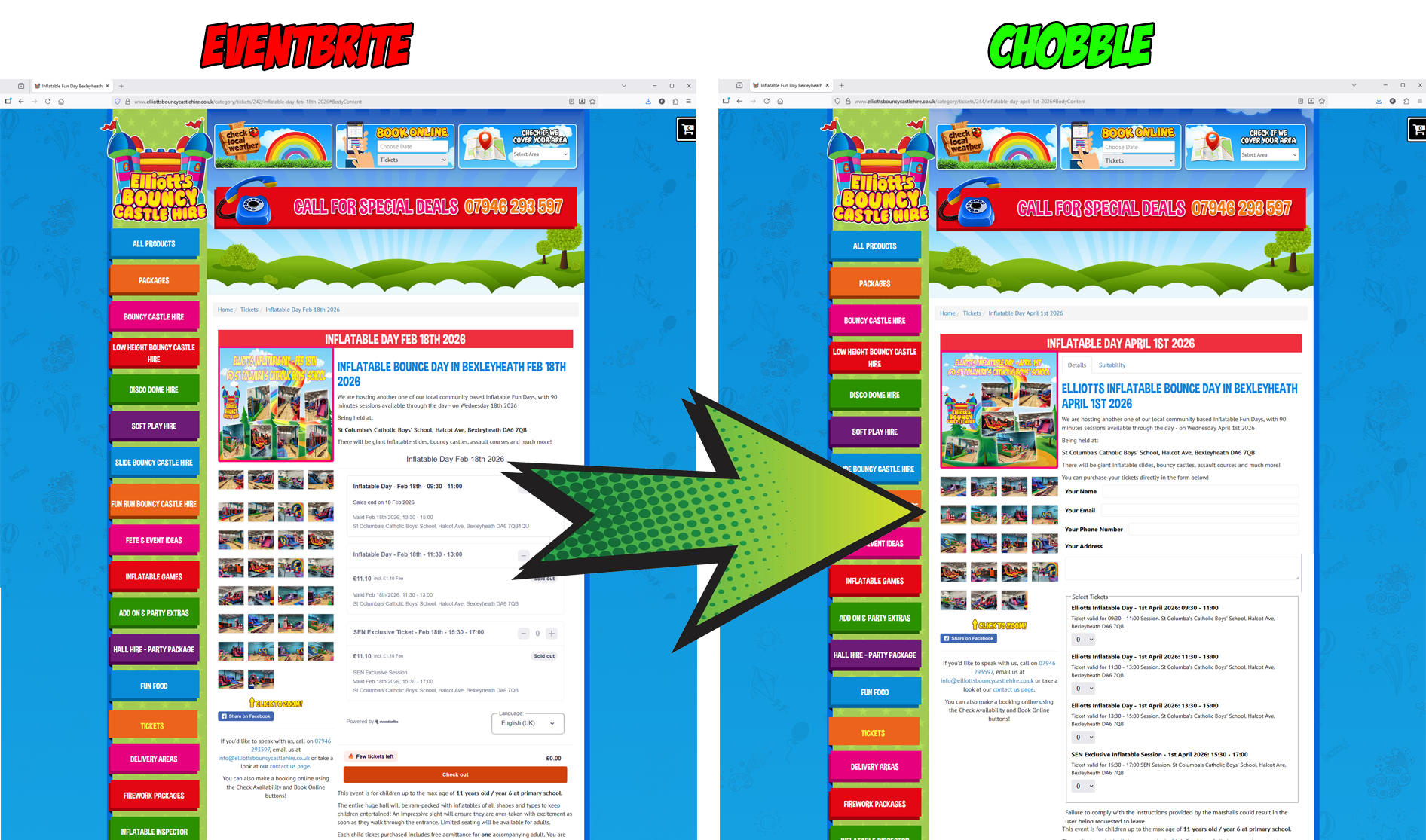
You can see that the interface from an end user experience is the same - A user goes onto your website and they book it while on that single page.
You can check them out here, they’re live:
My Feb 18th Event using Evenbrite embedded in my BCN site
My April 1st Event using Chobble embedded in my BCN site
(If you make a booking I’m keeping your money - Don’t be an idiot.)
I use my bouncy castle website as the driving force. I set it up as a product, put all my pictures in, my content and set everything up ther e - I am super familiar with it and just create it as a product - Only I make sure people can’t book the product online.
I don’t want to drive people to some other platform, I want them on MY website. That’s what they trust, that’s my brand and I don’t want to put all the effort into shoving them over to another website - I need to channel them to me!
The end user experience is super imortant. If you start asking the user a tonne of questions, make them bounce around from different pages and have them question whether they’re even actually on your site, then they’re far less likely to enter their card details and make the booking.
It’s a question of trust and secondly a question of convienience - People get bored easily and often abandon the process because it’s too much “faff” - They’ll do it tomorrow or soe other time…
My website provider offers a ticket solution out-of-the-box, it’s integrated into the site. It’s a great solution for a lot of people and I thoroughly recommend people sign up to https://www.bouncycastlenetwork.com/ for a market leading content management system event industry booking platform. You coudn’t ask for a better tool or more wholesome people to support it. They’re a market leader for a reason and offer incredible value. No one else can touch them, it’s not even close.
That said, the ticketing system isn’t for me. I’m not going to post pictures of other people’s set-ups, it would be wrong and it would like like I ambashing them as well as BCN - I’m not. I just don’t think it’s an area of the tool that they’re heavily invested in - They created it in response to a small group of people who wanted a solution (myself included), but it bastardises the inflatable equipment booking process and the user is bombarded with weird questions about the booking being on grass or concrete, whether they’re outdoors or indoors, choosing a date when there only is one date, choosing collection times etc. It’s not intuative and doesn’t “feel” like booking a ticket on any other platform - It’s shoe-horned in.
I wont go on, because again - I love my BCN site - It honestly changed my business and I dare say my life. But there’s a reason I have been losing out on £275 per event to eventbrite, it’s that good.
So what’s the booking process like? Is it a pain for users? Lets look…
User enters their name, email address, home address and then how many tickets they would like (they can select tickets to other time slots in the same window).
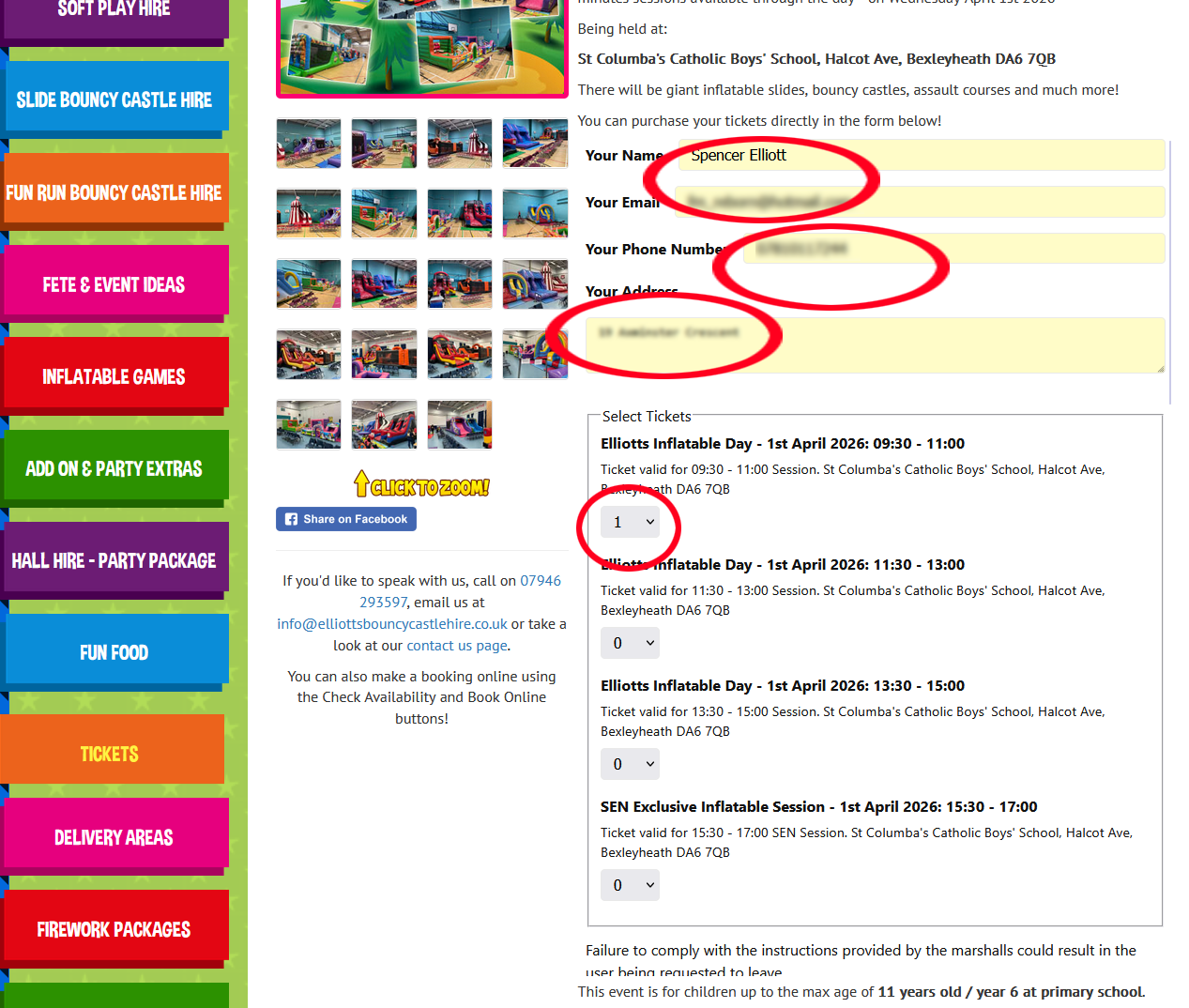
Then they scroll down and read the terms and conditions, accept them and hit reserve.
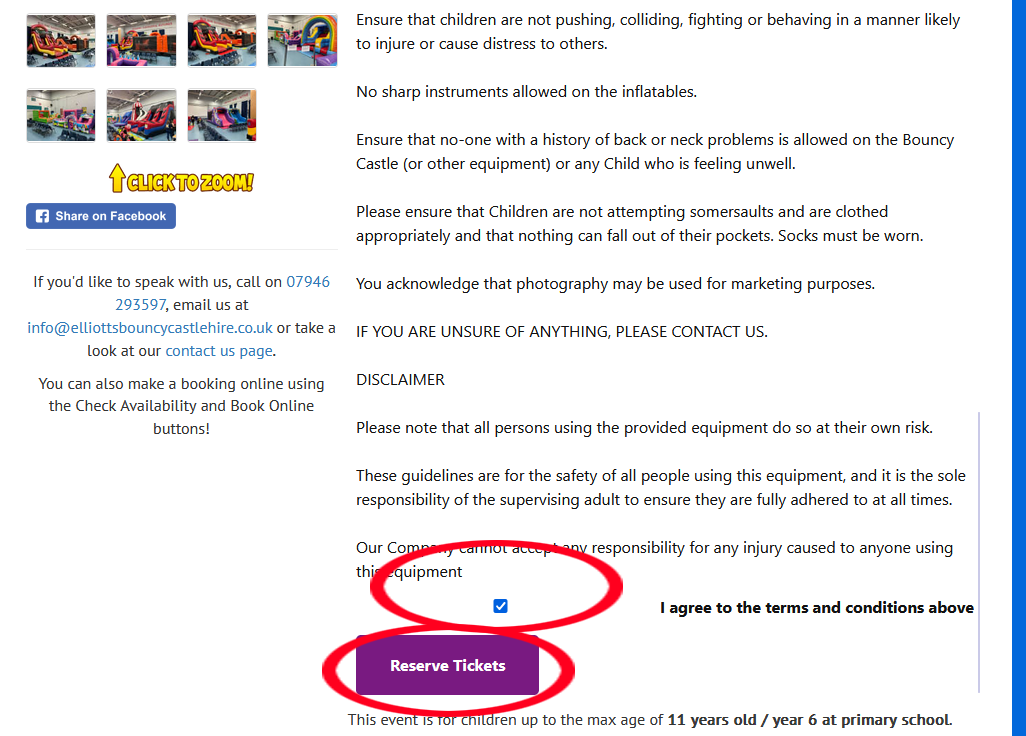
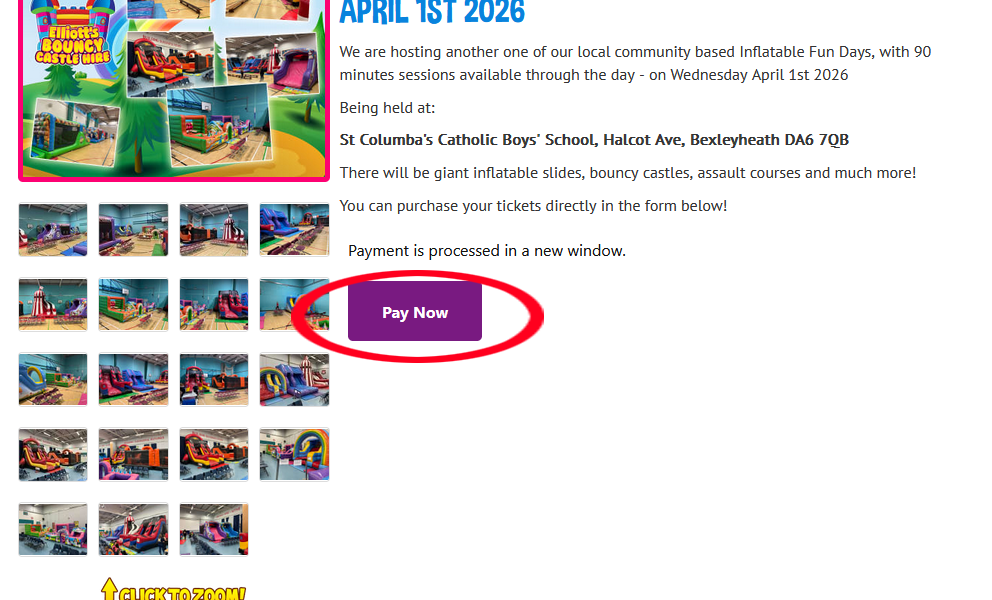
After that they are taken to a very familiar looking payment window and it’s done! Very slick and very simple.
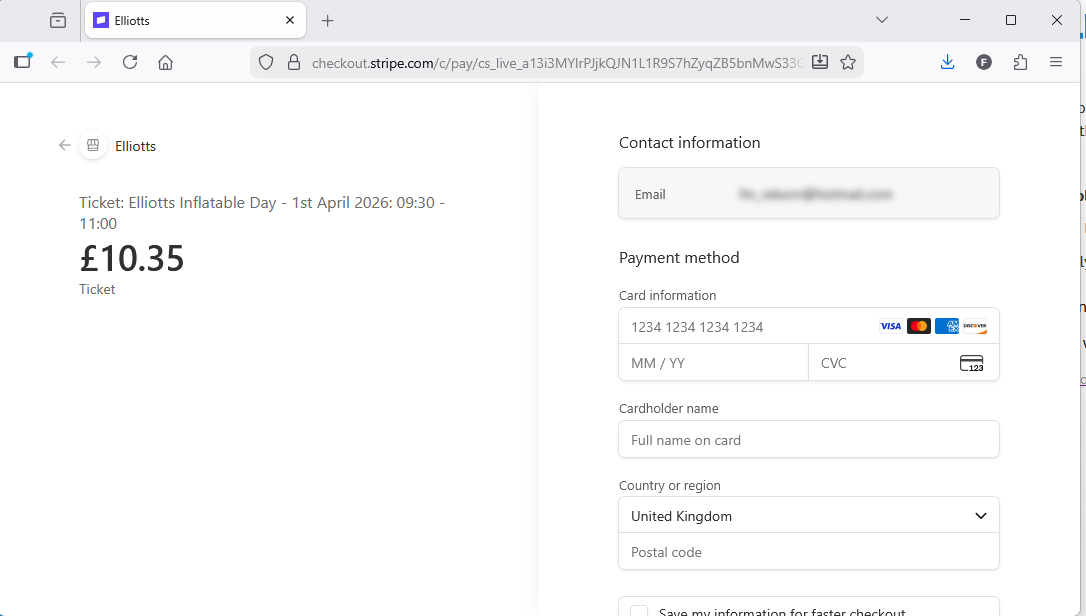
The user journey is incredibly slick, reassuring, easy and fast - You get them from thinking about it to having gone through and done it within moments.
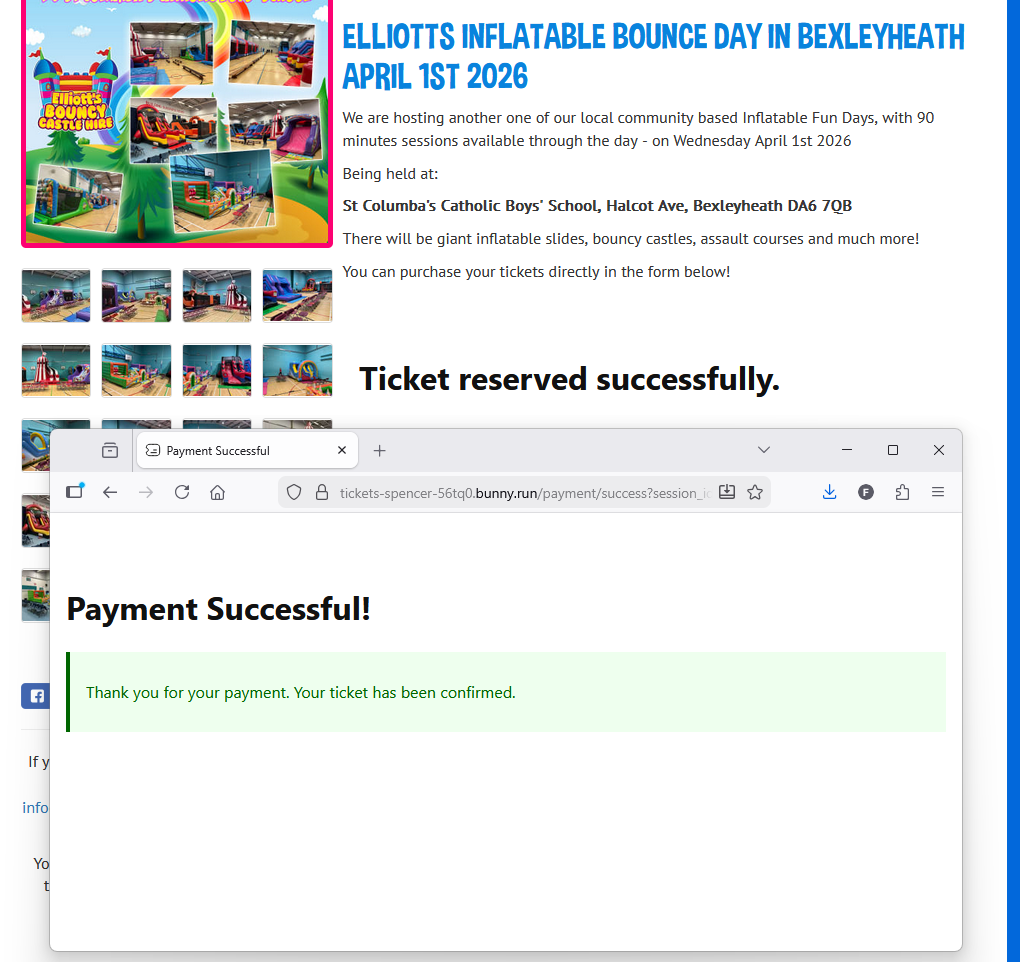
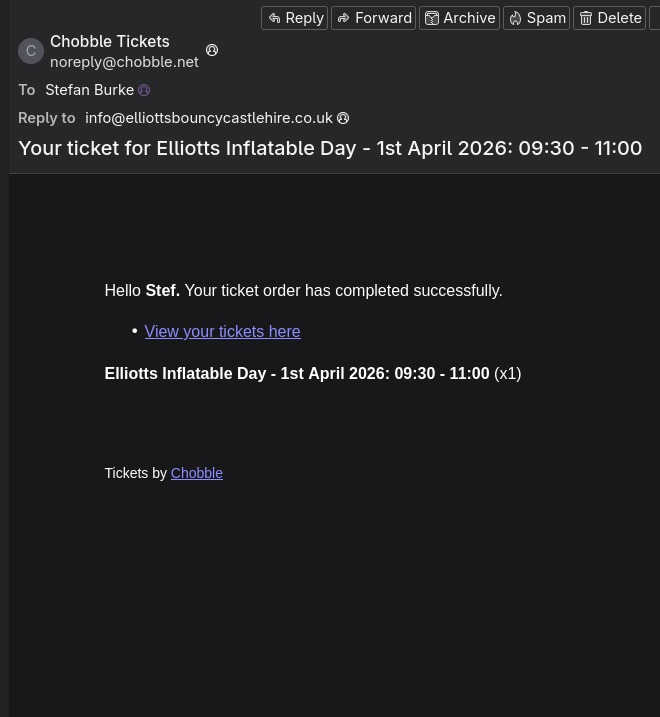
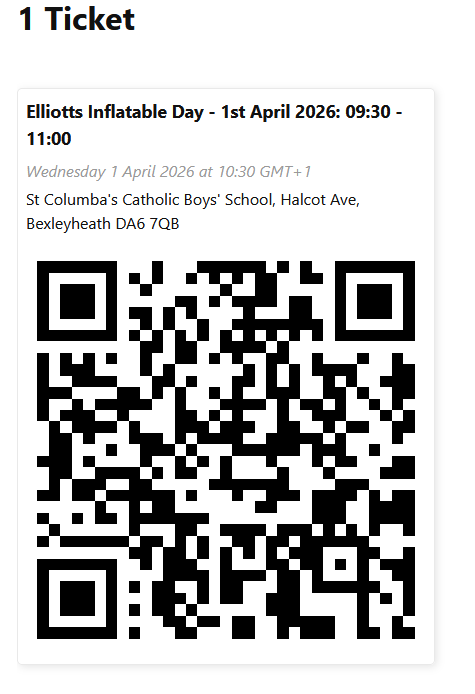
Once they’ve booked they receive an email with their ticket and the event details - Date, time, location - Plus a link to their ticket that has a QR code. They could print this out if they want, or just keep it as an email on their phone (or even a screenshot).
Insert picture of the ticket / QR code
For most users the journey ends there, other than if they want a refund, switch the session time or add more tickets - Until they arrive on the day and want to gain entry.
The smaller ticket companies and in-house options give you an attendee list and you check people’s names off a printed list. It’s pretty horrible and not even scalable - If you’re crossing names off a list and have hundreds of people showing up then it’s a one person job, you can’t get through people quick enough and it gets messy.
I’ve had this before and just ended up giving in and letting people walk through because it took too long.
The big ticket platform companies have an app you can use and then scan user’s tickets.
Chobble has a pretty cool solution for this - They create a QR code for the user on their ticket and you can open up the ticketing platform website back-end and there’s a check-in and check-out page where using your phone’s camera you “scan” the QR code to check them in.
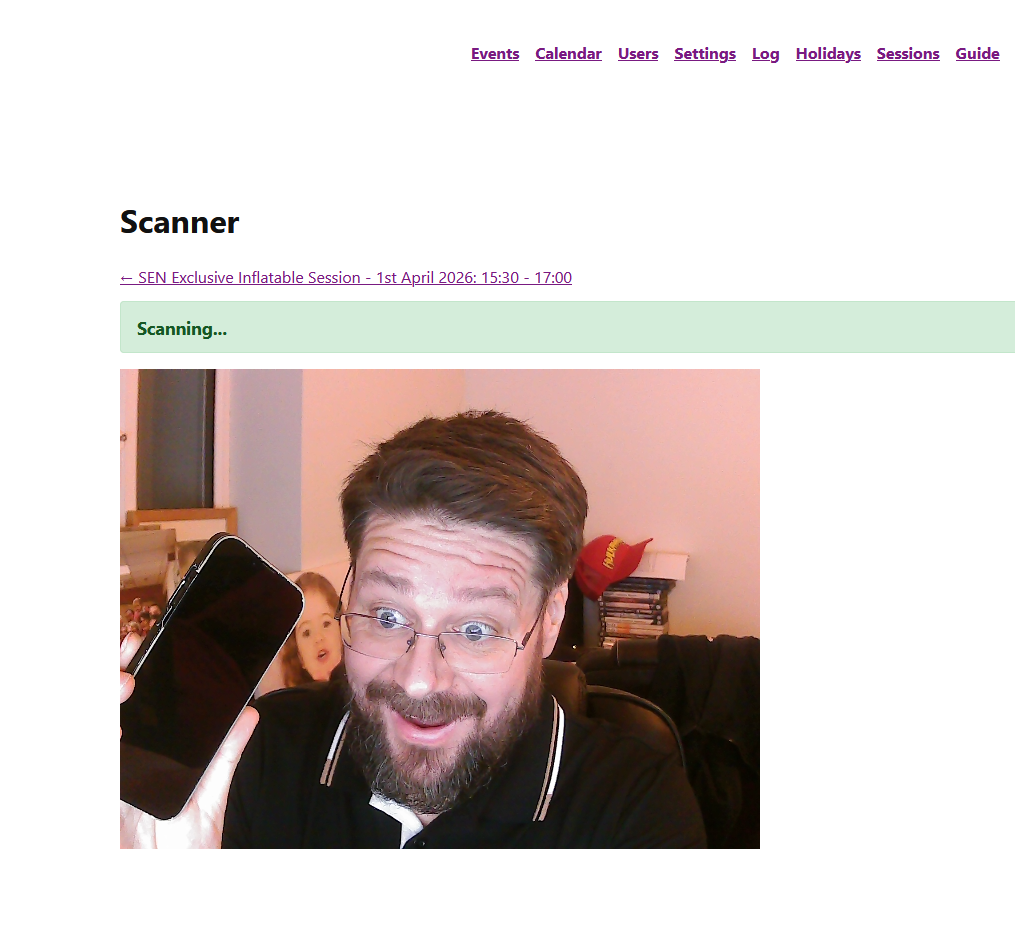
It’s super quick and efficient, plus it also means that the code is unique to the user - So you can’t have someone share a screenshot of the QR code and scam free tickets. It’s personal to them and if the code has already been used, it tells you that someone has already used it.
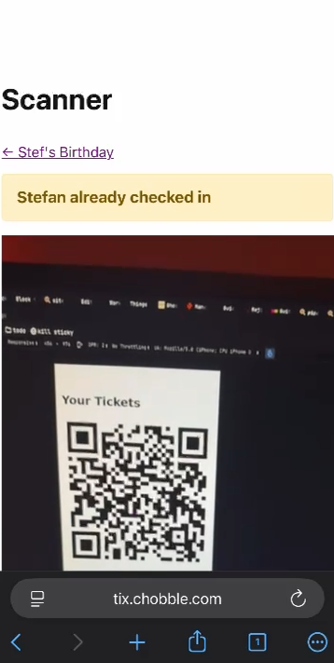
This is scalable - You can add as many users as you want as a ticket manager - They don’t even need an app of their phone, they just log into the website. This means you can have as many people as you want checking people into the event and busting those queues without stupid excel lists and print outs. - Although there is that option too if you prefer to keep things printed.
So the end user experience is professional, but what about setting up the event? What about the administration of the site and configuring an event?
It’s simple to use and configure - Especially when cloning an event/ticket; But it’s effective and does everything you need to set-up and start selling tickets. From start to finish the first set-up took 20 minutes (including setting up Stripe), but then I made 3 more tickets for the event that took under a minute each time.
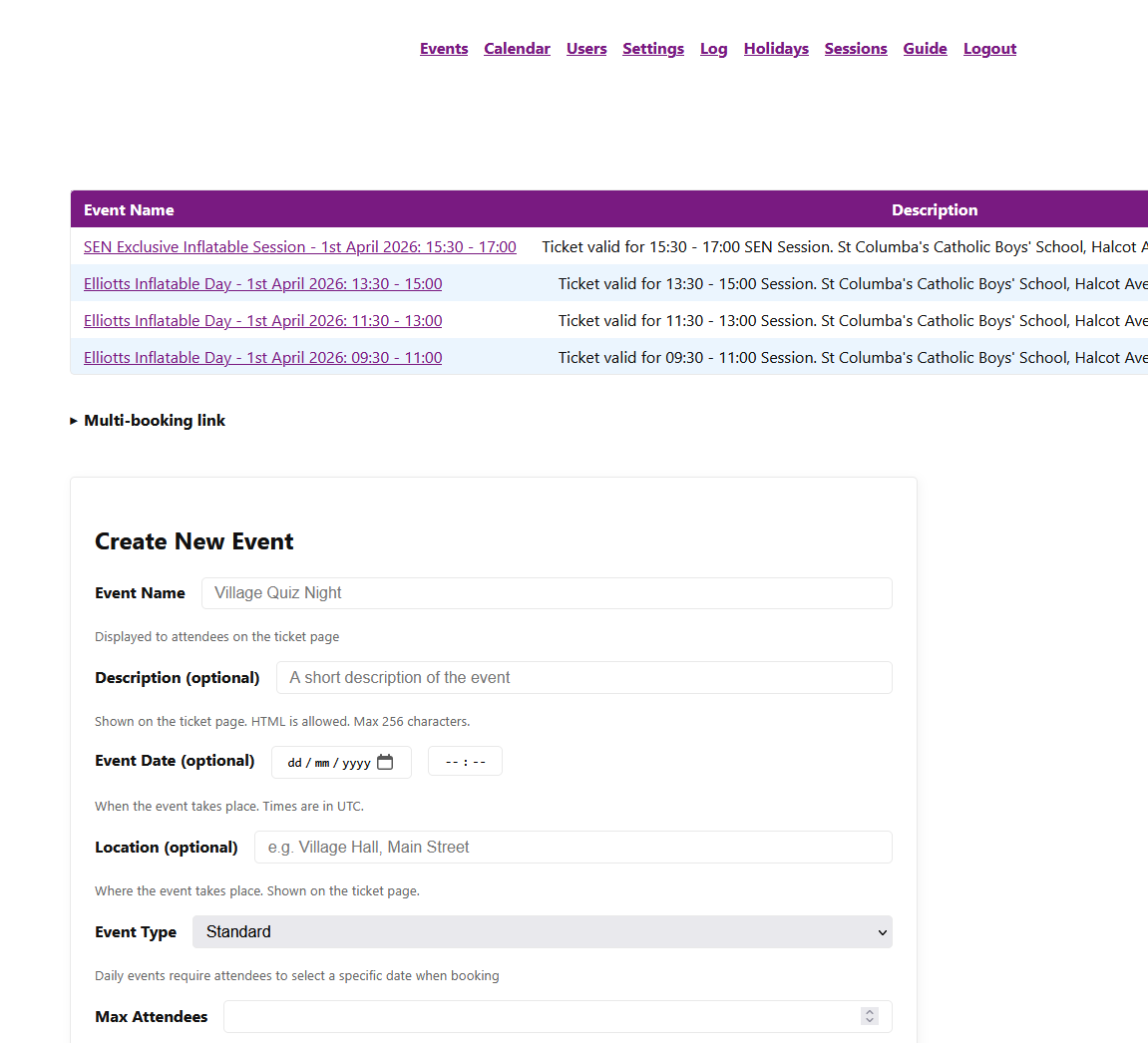
Considering it’s so new and I am an early adopter I was surprised by how matured it was. Never one to give up an opportunity to flatter myself, I feel like I did have some impact in this regard. I’ve been trickling feedback and feature requests to Chobble recently, leveraging my experience as a ticket seller as well as a technical hobbyist. I’m pleased I’ve been able to help point the ship in the rough direction it’s arrived at.
Does it have deep analytics for trend business intelligence reporting? No. But does it have advanced reporting so you can get the data out that you want? Also no.
What it does have is attendee lists, their details and filterable columns so that you have what you need to operate. Basic, but covers what you require out-of-the-box with attendee lists per day, ticket orders etc.
Does it have SMS text integration to mass text customers and marketing features? No. Ah.. But tell me it has integrated email support to mass email customers and build on existing success? Also, again no.
What is does have is the ability to export this data (you own it). You can then import it into bulkSMS or MailChimp and do this via a third party, which is what I suspect most people will do.
Although… What it also has it “webhooks”. This gets a bit too techy for most people, but Webhooks are basically similar to an API, they allow you to set-up connections and integrate with other systems - Either directly with these third party providers or develop your own platform to integrate; Your average bouncy castle man isn’t going to do this, but it’s an important point - If the system gains crtical mass and attention, then you will start seeing people build little cottage industry add-ons around this.
The system is open-source, it promotes integration to other platforms and software, they’re open to collaboration and will share development and it has sooo much potential. It’s in it’s infancy, but still offers exactly what you need and is comparable to major providers like eventbrite from day 1 - I can’t wait to see what you can do with it a year from now.
I’ve launched my first tickets with it and have already done things like switch tickets to other time slots, issued refunds, amended the price, copied tickets over, used the check-in and check-out. I was super pleased with the integration it offered to my BCN site and it genuinely feels like it’s a like-for-like of my current provier, but with far more potential and a fraction of the cost, plus easy to set-up and deploy as well as scalable.
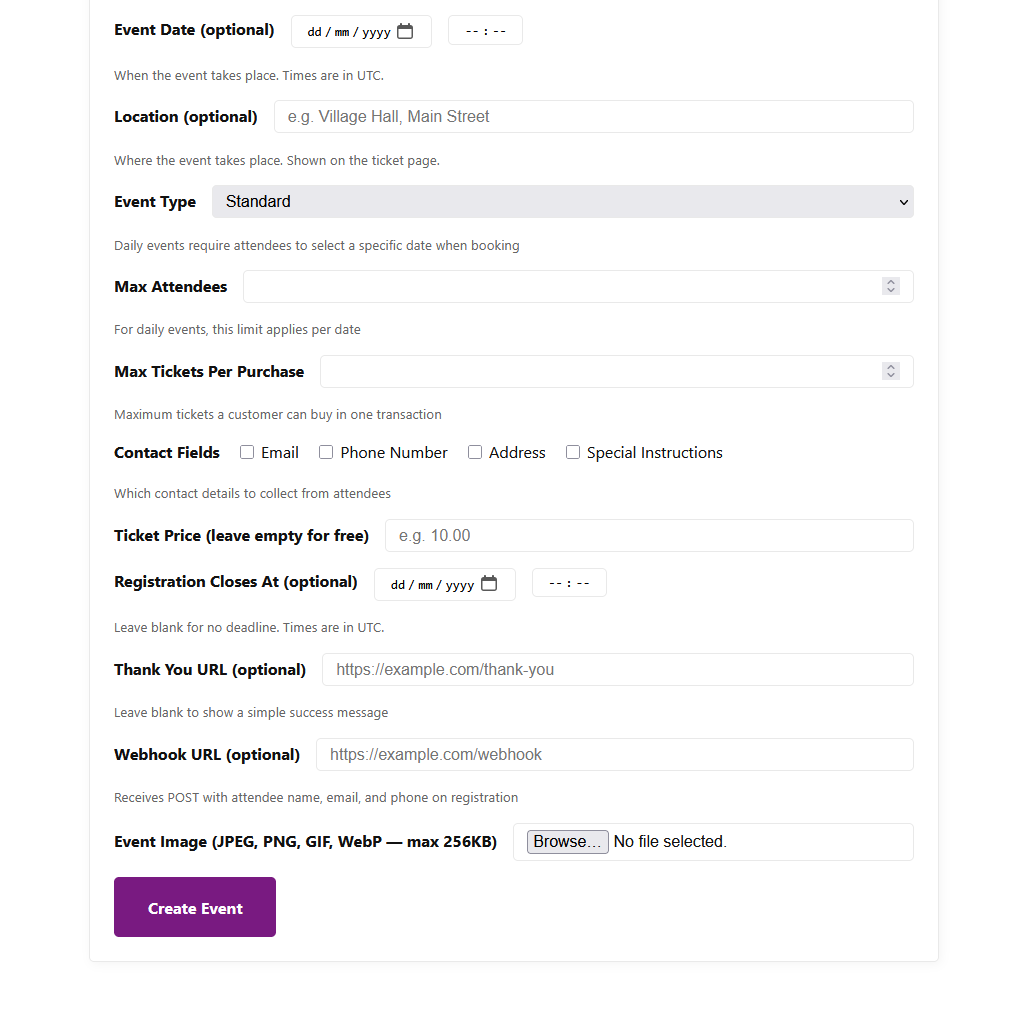
It honestly has all the settings and functionality that comes from a matured system - But it's just getting started!
The thing that really strikes me is how this will open the door for people run stay and plays or other “events” that technically could really do with a ticketing system to benefit from knowing who’s coming and numbers, building mailing lists to help grow the event and being able to easily communicate on mass to those people, but the ticket price is so low that you cannot afford to add big fees.
Most stay and plays are somewhere between £1 - £4 a ticket, if you add a ticket fee of £1 to it, then in some cases you’re literally double the cost to the user - And if they are happy to pay that, then why should it go to the ticket platform? It’s better off in your pocket. These ticket fees are cost prohibitive for things like that, but I feel like if people wake up to Chobble, it will quickly disrupt that area.
No offence to stay and plays, but pitching it as being something that will revolutionise the way they’re booked makes this sound small time - What I really mean is that this could (if adopted) make a huge difference and change the face of ticketing at every level and is flexible enough to scale from the small to the very large - It can offer somehting for everyone. I don’t just mean that for the event hire industry either - This feels like it could change ticketing platforms across the board and transcend all industries if it started getting traction.
It’s early days for me with this - This is the first event I’ve used it for; But I will follow-up after it’s run with part 2!
<< Return to news